Planning a renovation near North Salem’s Titicus Reservoir? You want improvements that look great and last, without risking delays or harming a critical drinking water source. In this guide, you’ll learn how to design watershed‑friendly upgrades, understand permits, and move your project forward with confidence. Let’s dive in.
Why watershed‑friendly renovations matter
Titicus Reservoir is part of New York City’s Croton water supply and sits in North Salem, spanning roughly 2 miles with a capacity of about 7.2 billion gallons. It drains a local area of about 24 square miles, which means what happens on nearby properties can reach the reservoir. You can read the basics on the NYC DEP Titicus Reservoir page.
Runoff from driveways, lawns, and construction sites can carry sediment, road salt, fertilizers, pet waste, and auto fluids. Because the reservoir supports potable water, watershed rules focus on limiting pollution and controlling stormwater. For the regulatory overview, see NYC DEP’s watershed regulations and applicant guidance.
Know the rules before you build
NYC DEP watershed rules
The Watershed Rules and Regulations apply in the Croton system, including Titicus. DEP review often applies to septic work, sewer tie‑ins, new impervious surfaces near streams, stream crossings or piping, and larger land clearing. For example, clearing 2 acres or more within 100 feet of a watercourse or within 300 feet of a reservoir can trigger DEP review. Homeowners are encouraged to request a DEP pre‑application meeting. Start with DEP’s regulations and applicant resources.
North Salem stormwater and wetlands
North Salem requires a Stormwater Pollution Prevention Plan (SWPPP) for regulated land development. The town designates a Stormwater Management Officer and requires erosion controls, inspections, and as‑built plans. Review the town’s stormwater chapter before you design.
If you plan work near wetlands or streams, the local wetlands code restricts certain activities within buffers. Prohibitions include placing septic tanks or drain fields in wetlands and installing some stormwater basins too close to wetlands. Check buffer limits and permitting steps in the freshwater wetlands code.
NYSDEC permits
New York State’s Protection of Waters permits are required for projects that change a stream, its banks, or shorelines. If earth disturbance is 1 acre or more, the state SPDES construction permit and the local SWPPP process typically apply. Learn more on the NYSDEC Protection of Waters program page.
Practical renovation strategies
Core principles
- Minimize impervious surfaces. Smaller paved areas and more vegetation reduce runoff, especially within riparian buffers. A national review of NYC’s watershed approach underscores the value of vegetated buffers and limits on close‑to‑water impervious area. See the National Academies review.
- Keep runoff on site. Where soils allow, let stormwater infiltrate through lawns, rain gardens, or engineered systems. Green infrastructure retains and treats water at the source. See the EPA Green Infrastructure guidance.
Smart site features
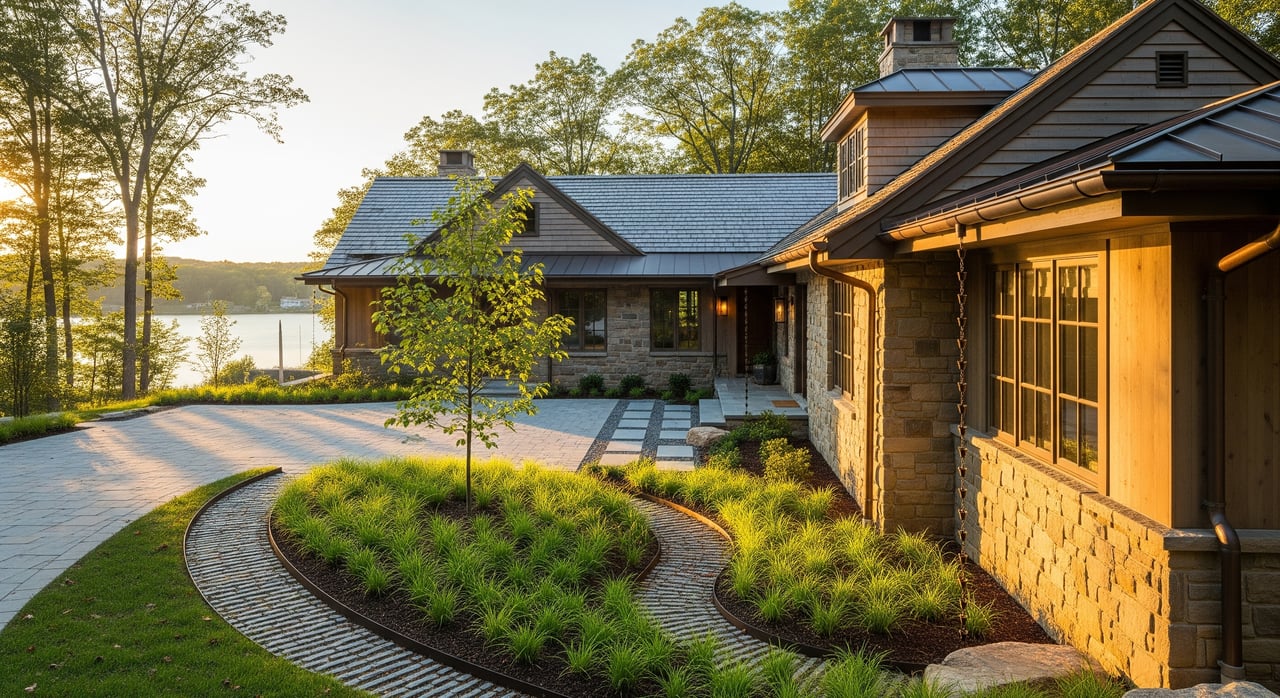
- Rain gardens and bioretention. Capture roof or driveway runoff in planted depressions that filter and infiltrate water. Avoid areas with high groundwater or shallow bedrock unless engineered with an underdrain and proper separation. For homeowner‑friendly design notes, see this rain garden fact sheet.
- Permeable paving. Pervious pavers or porous asphalt installed over a designed stone base let water soak in. Base depth and soil infiltration determine performance. In cold climates, plan for freeze‑thaw and routine maintenance. The WBDG low‑impact development resource explains key details.
- Downspout disconnection and rain harvesting. Direct roof leaders to vegetated areas or rain gardens, or store water in rain barrels or cisterns with safe overflows. See the EPA guidance for options.
- Vegetated buffers. Plant native trees and shrubs along streams to slow flows, capture sediment, and take up nutrients. The National Academies review highlights their role in watershed protection.
- Right‑size lawns and chemical use. Reduce turf where possible and keep fertilizers and pesticides away from watercourses and reservoir buffers. Local rules often limit fertilizer use near water; see North Salem’s code reference.
- Erosion control during construction. Install silt fence, inlet protection, stabilized construction entrances, and temporary seeding. North Salem lists required erosion control notes and stabilization standards in its erosion control section.
- Septic care and upgrades. Pump regularly and follow County Health and DEP rules. When replacing older systems near sensitive areas, discuss advanced treatment options during design. DEP provides applicant guides under its regulations page.
Check site constraints
Before finalizing designs, confirm:
- Soil infiltration rates and groundwater depth. Many practices require a percolation test.
- Slopes and erosion risk. Steep terrain may need engineered solutions.
- Distance to wetlands, streams, reservoir buffers, and any DEP easements. Use local maps and DEP resources to verify.
Plan your project step by step
- Map sensitive areas. Check for wetlands, watercourses, and reservoir buffers. If unsure, request a DEP pre‑application site visit through the DEP regulations portal.
- Engage qualified pros early. For septic, stormwater, or notable land disturbance, hire a licensed engineer, landscape architect, or experienced contractor. North Salem’s stormwater chapter details submittals and reviews.
- Confirm permit triggers. You may need a town SWPPP, a state SPDES permit for 1 acre or more of disturbance, DEP review under the WR&R, or an NYSDEC Protection of Waters permit for stream work. Start with the town’s stormwater rules and NYSDEC program page.
- Install erosion controls day one. Stabilize exposed soils, protect inlets, and use a stabilized construction entrance per the town’s erosion control standards.
- Document everything. Keep permits, inspection logs, and as‑built plans for stormwater features. North Salem requires as‑builts and a certificate of completion for stormwater facilities; see the town code.
- Plan for maintenance. Rain gardens, permeable pavements, and septic systems need periodic care. The EPA guidance outlines typical schedules.
Benefits and performance
Green infrastructure like rain gardens and bioretention reduces runoff volumes and removes pollutants such as sediment and some nutrients when properly designed and maintained. Large studies and federal guidance document these benefits, with performance varying by soil, sizing, and upkeep. For a research summary, see the USGS overview of stormwater practices and the EPA guidance.
Next steps and local help
If you are considering a driveway upgrade, patio, addition, or septic replacement near Titicus, start by checking DEP rules and North Salem’s stormwater and wetlands codes. Early coordination with the town and DEP can prevent rework and keep your timeline on track. When you want to align smart upgrades with resale goals, reach out to Grace Mons for local insight and a practical plan.
FAQs
What is a “watershed‑friendly” renovation near Titicus Reservoir?
- Any upgrade that limits runoff and pollutants, such as permeable paving, rain gardens, disconnected downspouts, vegetated buffers, careful erosion controls, and well‑maintained septic systems, aligned with DEP watershed rules and town codes.
Do I need a permit to replace or expand a driveway near a stream?
- It depends on proximity and disturbance; new impervious area near streams can trigger DEP review, and larger disturbances can require a town SWPPP or state SPDES coverage. Start with DEP’s regulations and the town’s stormwater chapter.
How close can I build to a wetland or stream in North Salem?
- Local wetland buffers restrict certain activities and require permits; some uses are prohibited within specified distances. Confirm your site’s buffer and review the freshwater wetlands code before planning.
Are rain gardens suitable for North Salem’s winters?
- Yes, when designed with proper soils, sizing, and overflow, and with maintenance for leaf litter and sediment; consider freeze‑thaw durability and underdrains where needed. See the rain garden fact sheet and EPA guidance.
When is a SWPPP required for my project?
- North Salem requires SWPPPs for regulated land development activities, and state SPDES coverage applies for earth disturbance of 1 acre or more. Review the town stormwater requirements and NYSDEC program page.
Who should I contact with DEP questions about a North Salem project?
- Contact the DEP East‑of‑Hudson team and request a pre‑application conversation using the DEP regulations and applicant resources.